

Info, Knowledge Base
Freeze Dryer Ice Condenser Temperature & Vacuum Pump Selection Know How
In laboratory freeze‐dryers, a common question is, what ice condenser temperature to choose. Typically, there are 3 choices: -50°C or –85°C and less common –105°C.
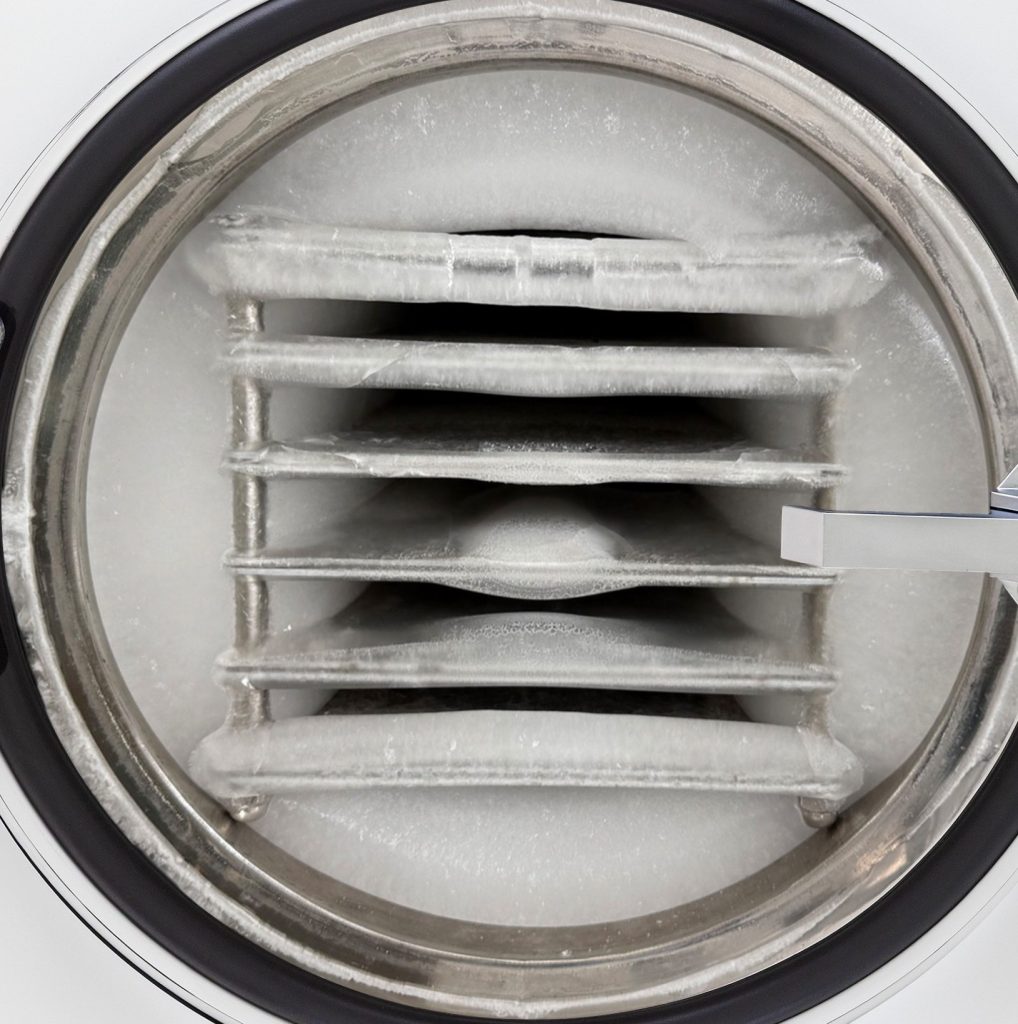
With organic (co‐)solvents more frequently used in freeze drying, key factors to consider include the solvent’s freezing temperature, the solvent ratio, the total solvent load, safety concerns (flammability) and equipment lifetime concerns (material compatibility).

The condenser must be much colder than the used solvent’s freezing point, so that vapour will condense and subsequently freeze onto the ice condenser, rather than remaining in the vapour phase, which would allow the solvent to exit the dryer and end up condensing inside the vacuum pump, causing potential reliability and maintenance cost issues.
A colder condenser can trap more solvents, so traditionally users opt for colder ice condensers, because their strategy is to optimise the system setup.
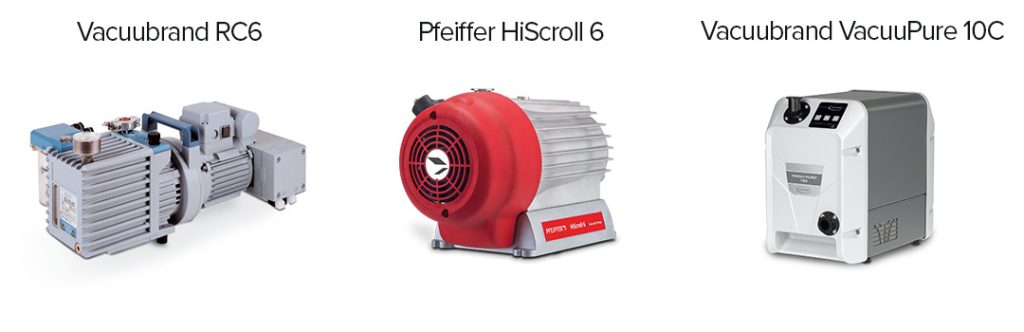
However, this approach is somewhat outdated, thanks to new vacuum pump options emerging on the market. These pumps have improved solvent compatibility, and some are even inert against common freeze-drying solvents, thus representing a viable system configuration option. A combination of a “warmer”, lower cost ice condenser, with a “better suited” vacuum pump may offer lower overall investment and cost of ownership.
Ice Condenser Selection Considerations:
Product Sublimation Temperature and Vapour Pressure
Freeze‐drying is driven by the pressure difference between the product and condenser. The condenser must be colder than the product temperature for sublimation to proceed efficiently. For example, (water) ice at –50 °C exerts only ~0.04 mbar vapour pressure, whereas at –10 °C it is ~2.6 mbar. Operating at too warm a condenser (close to the product temperature) slows drying dramatically. In mixed solvents, the highest‐vapour‐pressure component (often the most volatile solvent) dominates the required condenser setpoint.
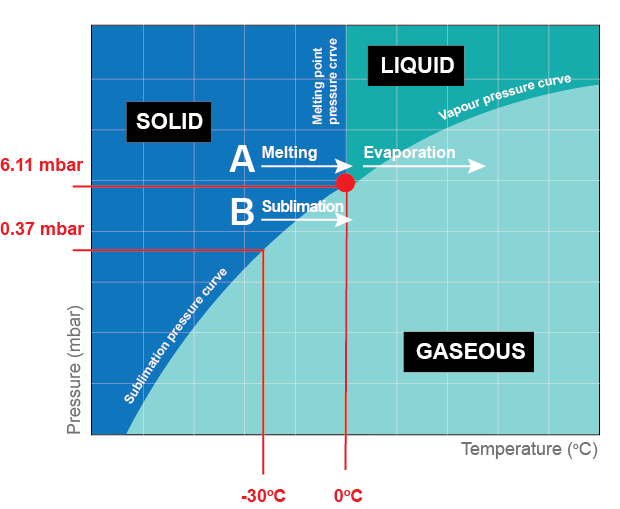
Solvent Volatility and Freezing Point
Each solvent has a characteristic freezing point. If the condenser is warmer than this point, the solvent will not freeze on the condenser. For example, water’s freezing point is 0°C, but many organics freeze far below –50°C (e.g. acetone –95°C, methanol –98°C and ethanol at -114°C). A condenser at –50°C will trap solvents with freezing points above –50°C (such as water, DMSO, tertbutanol, TFA, etc.), but solvents with freezing points below –50°C will not freeze or remain liquid and “reflux” unless the condenser is colder. Conversely, if the condenser is warmer than the solvent freezing point, the solvent may potentially reach the vacuum pump.
Condenser Loading and Capacity
More volatile and/or higher‐quantity solvents generate a larger ice/solvent load. An ice condenser has a finite “ice capacity” and removal rate. Overloading can cause temperature rise compromising drying performance and vacuum pump protection. In practice, operators often limit the organic solvent concentration to avoid overwhelming the trap. If a process will involve large solvent loads higher capacity machines should be chosen. Additional liquid nitrogen traps must be used for lowest freezing point solvents. Dilution (in water) is often a good strategy.
Effective Condenser Performance at Solvent Freezing Point
Lower ice condenser temperatures of –85°C or -105°C are achieved by using cascade refrigeration systems. A cascade consists of two or more compressors, generally with different refrigeration gas in each system. A cascade is built by interconnecting the systems where one “helps cool down the other” to achieve lower temperatures. Cascade systems command higher purchase prices and have lower condensing efficiency at higher temperatures compared to single stage systems. Due to increased complexity and nature of gases used, cascade systems tend to be less reliable, potentially causing increased maintenance hence cost of ownership.

Safety and Material Compatibility
Organic solvents (especially flammable ones) pose safety and material compatibility risk. The condenser and all solvent wetted materials must be compatible with the solvent used. Where higher amounts of flammable solvents are used thought must be given to dealing with explosion risks e.g. by placing equipment into fume hoods or rated rooms and potentially via explosion protection rating of the equipment.
Common Solvents in Freeze Drying
The table below lists common solvents used in freeze‐drying, with their freezing (melting) points, boiling points, and special notes. This helps identify which solvents require colder traps or suitable vacuum pump choices.
| Solvent | Freezing Point | Notes |
| Water (H2O) | 0°C | Primary solvent used in freeze drying. |
| Ethanol (EtOH) | -114°C | Flammable, miscible with water, often used for sterilization or as co‐solvent in HPLC |
| Methanol (MeOH) | -98°C | Highly volatile/toxic, used as solvent or cryoprotectant |
| Isopropanol (IPA) | -89°C | Flammable, used for cleaning and some formulations |
| Acetonitrile (ACN) | -48°C | Highly volatile, HPLC/mobile phase solvent |
| Acetone (CH32CO) | -95°C | Very volatile, common organic solvent |
| Dimethylformamide (DMF) | -61°C | Polar aprotic, used for drug synthesis/peptide coupling |
| Dimethyl sulfoxide (DMSO) | +18°C | Highly polar, cryoprotectant in cell banking |
| Trifluoroacetic acid (TFA) | -16°C | Strong organic acid, used in peptide synthesis/HPLC, use often must be limited to very low concentration |
| Dichloromethane (DCM) | -97°C | Volatile chlorinated solvent, heavy and toxic |
| Chloroform | -63°C | Toxic, chlorinated solvent |
| Ethyl acetate (EtOAc) | -83°C | Common solvent |
| Tetrahydrofuran (THF) | -108°C | Highly volatile, often cryogenic |
| 1,4-Dioxane | +11°C | Polar solvent |
| Tert-Butanol (tBuOH) | +25°C | Nonpolar alcohol, sometimes used as a crystalline co-solvent |
Potential System Design Strategies:
Traditional Approach
A colder ice condenser will trap more solvents, so selecting a -85°C or -105°C cold trap is a viable option to protect your vacuum pump from potential solvent damage.
It must however be noted that the ice core surface temperature may be a lot higher than the (catalogue) specified ice condenser temperature. Ice builds up inside the condenser, leading to a temperature drop between the condenser specifications versus actual ice surface temperature.
A substantial deltaT is needed between ice surface temperature and solvent freezing point for the solvent to be captured effectively.
It is worth noting that -105°C ice condenser temperature freeze dryers are not widely available on the market. Both -85 °C or -105°C specification machines command substantially higher purchase prices compared to -50°C machines. Typically cost of ownership is also higher due to higher maintenance requirements caused by higher system complexity. A viable option is to select a -50°C machine and invest into a better suited vacuum pump.
Modern Approach
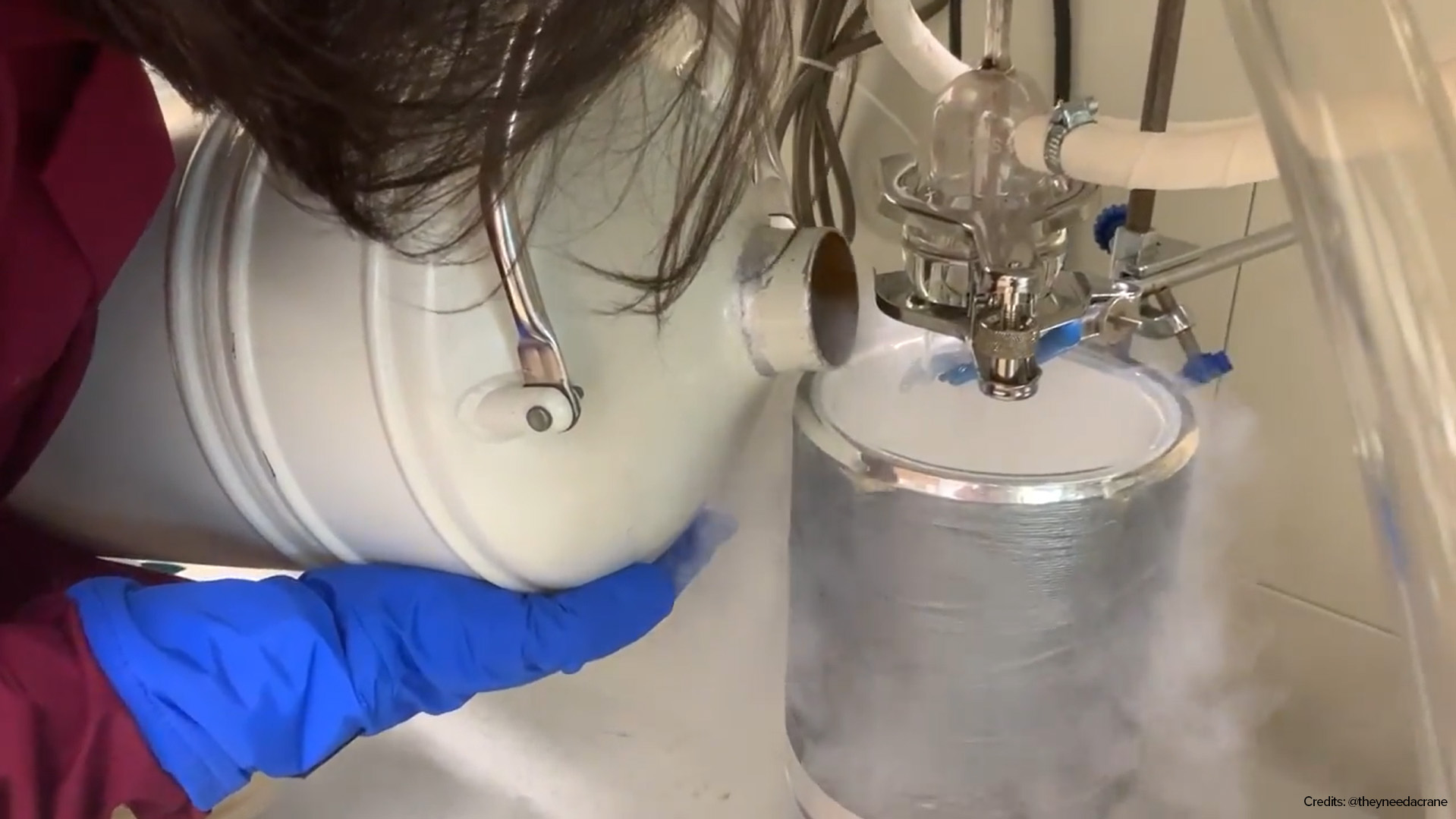
As seen in table above, many common solvents have freezing points, that are so low, that higher priced, lower temperature ice condenser specification machines should be chosen. However, some very common solvents such as Ethanol and Tetrahydrofuran cannot even be trapped by -105°C machines. This leads to the need for expensive secondary liquid nitrogen traps, which have high operating cost and pose potential WHS (work health safety) risk.
The need for “vacuum pump protection” stems from the traditional use of oil sealed rotary vane vacuum pumps. Rotary vane vacuum pumps have first been conceptually described in 1588 (Agostino Ramelli) and first commercial patents have been granted in 1858. Whilst the technology is mature, the oil, which is needed for vacuum performance and pump lubcrication, is also its biggest downfall. Both mineral oil and the production materials typically used are not compatible with solvents. Whilst some improvements can be made via use of silicone oil and (construction) material choices or coatings, the technology, today, is really superseded and only still used because of low cost.
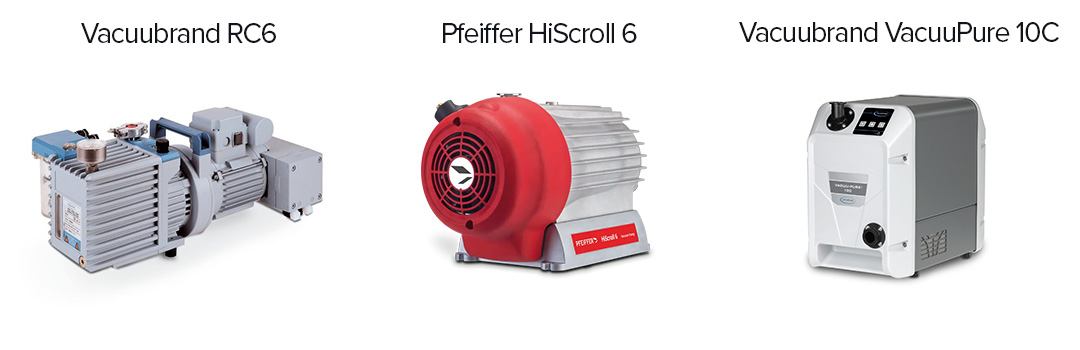
Modern oil free vacuum pumps offer an attractive alternative. Pump technologies using scroll and screw principles are able to operate without oil and can be made from solvent optimised, or entirely inert materials. They offer additional advantages of significantly lower cost of ownership, due to longer service intervals and higher reliability. Further, some pumps offer the ability to collect solvent via exhaust vapour condenser to help reduce solvent loss, reduce cost through solvent re-use and protect the (lab) environment.
Summary
Economic consideration ought to be given whether it is better to invest into lower temperature ice condenser freeze dryers or better suited vacuum pumps. Both options can offer a path to a freeze-drying system that performs well and has acceptable operating cost. However, in many cases the cost of a more suitable vacuum pump is lower than the cost for a -85°C or -105°C ice condenser freeze dryer.
Cryodry and our dealers offer oil free vacuum pump alternatives. We invite you to discuss your individual application and potential system solutions. Please contact us.